Home » Uncategorized (Page 9)
Category Archives: Uncategorized
Understanding poetry: rhyme v.2
From the Oxford:
rhyme |rīm|
noun
correspondence of sound between words or the endings of words, esp. when these are used at the ends of lines of poetry.
• a short poem in which the sound of the word or syllable at the end of each line corresponds with that at the end of another.
• poetry or verse marked by such correspondence of sound.
• a word that has the same sound as another.
To simplify:
rhyme, the correspondence of sounds between words or the ending of words.
rhythm is a regular, repeated pattern, from the Greek rhuthmos, ‘to flow.’
To review:
syllable, a vowel sound usually conjoined to a consonant.
vowel, an open vocal-tract sound.
consonant, a closed vocal-tract sound.
Now, some examples. (Note that rhyme at the end of the line is only one of many types):
triple, words with three rhyming syllables, e.g., quickening/thickening
head, i.e., alliteration: “And the silken sad uncertain rustling of each purple curtain.”
end, rhyme at the line’s end
apocopated, a “cut-off”rhyme, e.g., hot/potted, pain/gainless
internal, rhyme within the line
rising, an iamb (syllables unstressed and stressed) or single stressed syllable at line’s end (see image below)
slant/half/off/approximate/near, an “almost” rhyme, e.g, fear/care, gone/moan
homonym, a repeated rhyme with different spelling, e.g., sail/sale, preys/praise
identical, or repetition, the same word, reemphasized
pure, rhyme with differing initial consonant: bell/cell/dell/fell/hell
falling, a trochee (syllables stressed and unstressed)(see image below.)
unpatterned, randomly-placed rhymes
eye, slant rhymes that look alike: cough/rough, wind/find
linked, end syllable of one line beginning the next, e.g.,
Night weighs down on the rooftop
stops the flashlight of a scared cop
consonance, recurring consonants in proximity
assonance, repeated vowel sounds in stressed syllables
repetition, repeating word or phrase
The list is an adaptation of the types of rhyme listed in
Mayes, Frances. The Discovery of Poetry. Harcourt. 2001. (See https://kingsleyandersen.com/2013/07/01/494/ for page numbers.)
The stressed or accented syllable is indicated by the ictus′ and the unstressed or unaccented syllable by the breve˘


Tools
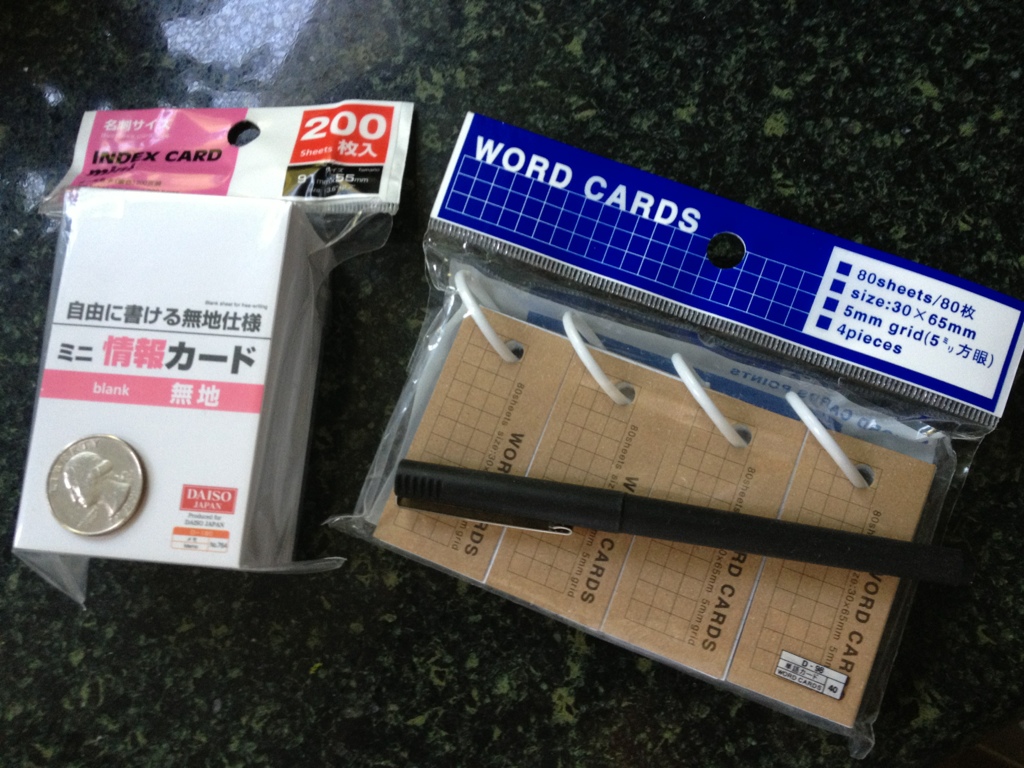
If you like conciseness and efficiency, the Japanese goods store Daiso offers these small cards for $1.50 each package.
On Telegraph in Berkeley.
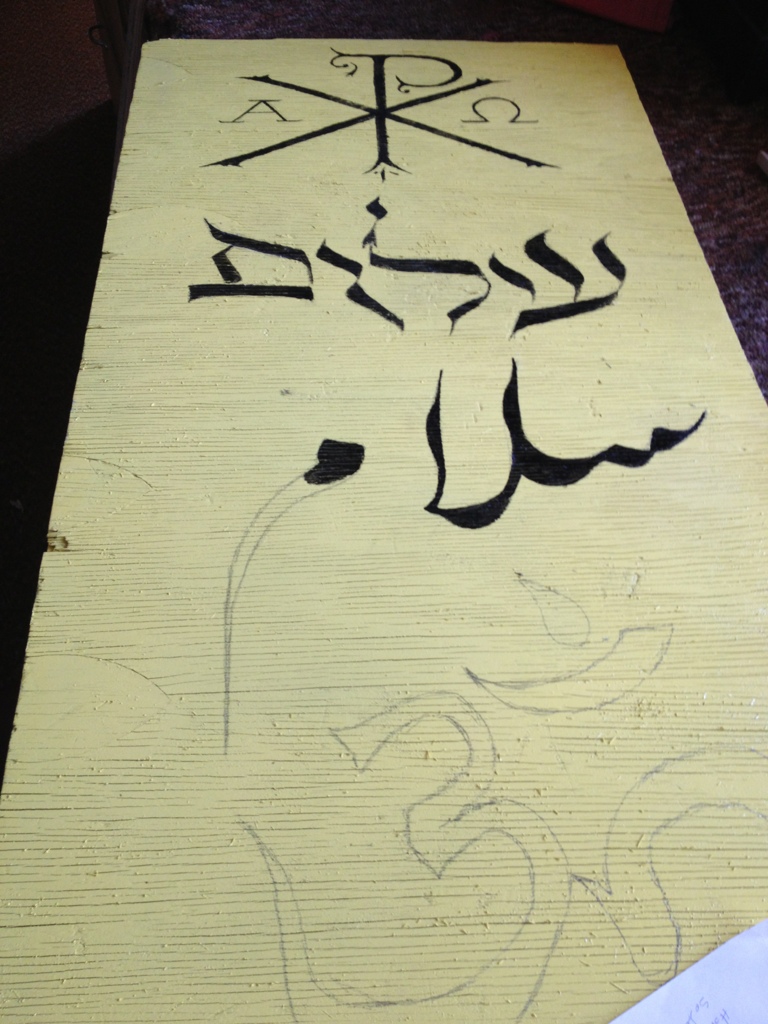
“Before and after”
How are you filling the spaces in between, friends?
Self pity
Self-Pity
By D.H. Lawrence
I never saw a wild thing
sorry for itself.
A small bird will drop frozen dead from a bough
without ever having felt sorry for itself.
COMMENTARY:
How does Lawrence know this? Does he speak sparrow?
Even if the bird did feel sorry for itself, the result is the same: bird’s dead.
Nature is what it is. Time is what it is. Get in the game, folks.
Characterization
Characterization: how the author presents the dramatis personae of his or her story.
Direct characterization is when the author tells you directly that the character is of a particular state of mind or in a specific condition. The author comes right out and writes that the character simply is.
Indirect characterization is when the author describes the character and lets you the reader draw your own conclusions. He or she can do this by describing
Looks of the character, e.g., clothing, physical state
Effect the character has on other characters or situations
Actions that the character takes
Speech of the character or that which is directed to that character
Thoughts of the character if the POV is omnicient
Remember it with this word mnemonic: “Indirect characterization is when the author says the LEAST about a character.”
In addition are these considerations of the character:
Flat character is one in which the author presents few aspects to his or her personality. This may be because the character is simple, or because the character is a foil or plays a symbolic role.
Round character is fully developed, complex.
Static character does not grow or change through the course of the story.
Dynamic character grows or changes as a result of the complications and climaxes inherent in the story or situation.
Click to access Characterization.pdf
You can also look at this .pdf and see how the National Council of the Teachers of English straight joinked my intellect.
“STEAL” indeed.
Let me be honest:

Rough night. Running a little late, sun already coming up for a one-hundred degree day. A little sore. Wake at 0440, too dark to run. Alarm goes off — ahhhhhh half-hour more.
Yeah.
Then I get up and run it and my time is uggggghhhh and this hill is a pull and…
Yep.
You know why I do it? (Yes you do because you read my motives, already posted.)
Leadership by example.
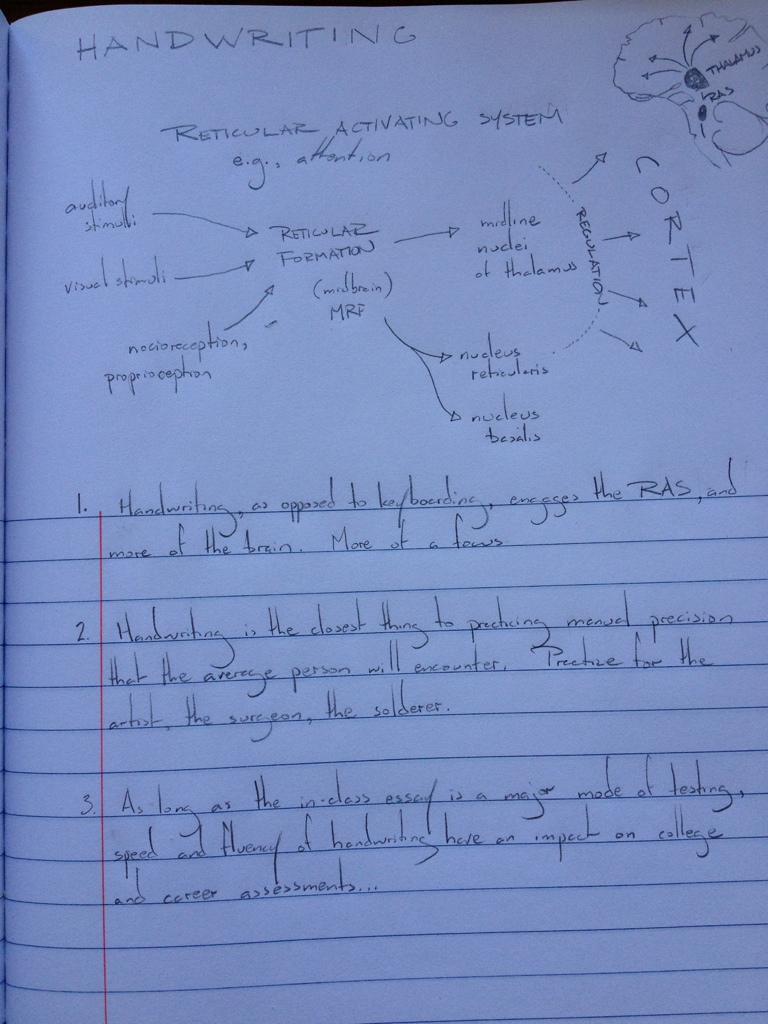
Handwriting fluency and the in-class thesis
Handwriting fluency and the in-class thesis
Another reason that I assign a hand-written journal: seeing as you will be tested largely by hand writing essays in class, fluency and practice are crucial. The journal is a training ground.
From the article:
“Students completed a measure of handwriting fluency and provided samples of writing from exam conditions and a formative class essay. The results indicated that, compared to a class essay, exam writing was constrained by the low level writing skill of handwriting fluency. Surprisingly, it was found that the undergraduates were very slow writers whose writing speed was equivalent to published fluency data on 11-year-old schoolchildren. The relationships between handwriting fluency and writing quality were also very similar to those of published data on 11-year-old children, with handwriting fluency accounting for large amounts of the variance in writing quality and tutor marks for exam answers. The results of the current study indicate that lower level processes constrain the higher level performance of undergraduate students to a significant extent.”
Worth a read if you want to see for yourself.
 Kingsley Andersen