Home » Posts tagged 'AP Lit' (Page 6)
Tag Archives: AP Lit
Characterization
Characterization: how the author presents the dramatis personae of his or her story.
Direct characterization is when the author tells you directly that the character is of a particular state of mind or in a specific condition. The author comes right out and writes that the character simply is.
Indirect characterization is when the author describes the character and lets you the reader draw your own conclusions. He or she can do this by describing
Looks of the character, e.g., clothing, physical state
Effect the character has on other characters or situations
Actions that the character takes
Speech of the character or that which is directed to that character
Thoughts of the character if the POV is omnicient
Remember it with this word mnemonic: “Indirect characterization is when the author says the LEAST about a character.”
In addition are these considerations of the character:
Flat character is one in which the author presents few aspects to his or her personality. This may be because the character is simple, or because the character is a foil or plays a symbolic role.
Round character is fully developed, complex.
Static character does not grow or change through the course of the story.
Dynamic character grows or changes as a result of the complications and climaxes inherent in the story or situation.
Click to access Characterization.pdf
You can also look at this .pdf and see how the National Council of the Teachers of English straight joinked my intellect.
“STEAL” indeed.
A letter to Advanced Placement students…
…who have been assigned Crime And Punishment as a summer reading book:
HaaaaahaaaahahhhhaaAAAAAAA!
Nah, seriously:
“College-level literature.” By that, they mean university-level literature. (What, did you think it would be, The Alchemist? HaaaahahhhhaaaaaaHAAAAA. Okay, let me compose myself.) Hence the exhortation to start now.
One chief reason that we recommend the Norton Critical Edition of the Coulson translation is because of the excellent essays that follow: you did notice that 1/3 of the pages are commentary and essay, no?
Read the story. Raskolnikov thinks he can do the murder — that he should do the murder — but when he’s done it, his thinking really falls apart. Human nature is being illuminated quite deeply in this rich story.
Are you seeing that? If you are, then you’re on the right track and you’re doing fine. When you finish, read the commentary and essays. Things will click.
CaP is part of the canon. If the novel doesn’t show up on the free choice essay list, I will be a monkey’s uncle. (Even if it doesn’t, the question will say “or a work of equal literary merit,” and CaP is indeed that.) By taking your time with Dostoevsky, you are laying a firm foundation.
Take time and have faith.
Diction in CaP
Diction, simply, is the author’s choice of words.
As the protagonist approaches the murder, pay attention to Dostoevsky’s diction as he describes Raskolnikov’s physical feelings as opposed to his thoughts, i.e., the body as opposed to the mind.
This one:
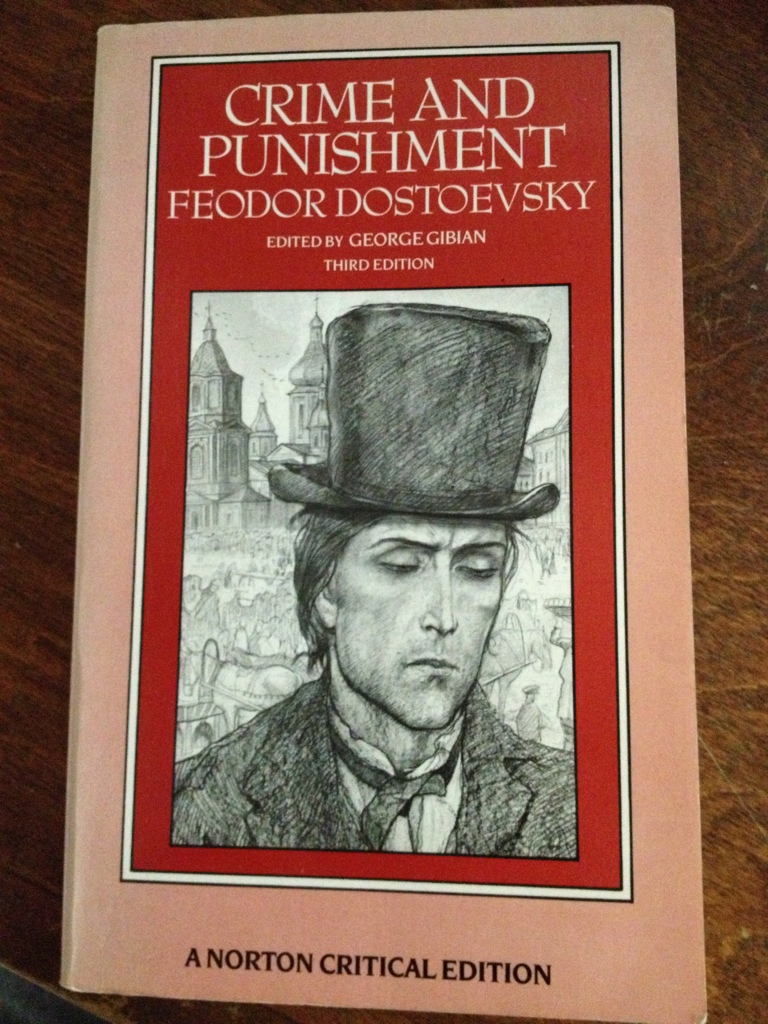
Try for this copy.
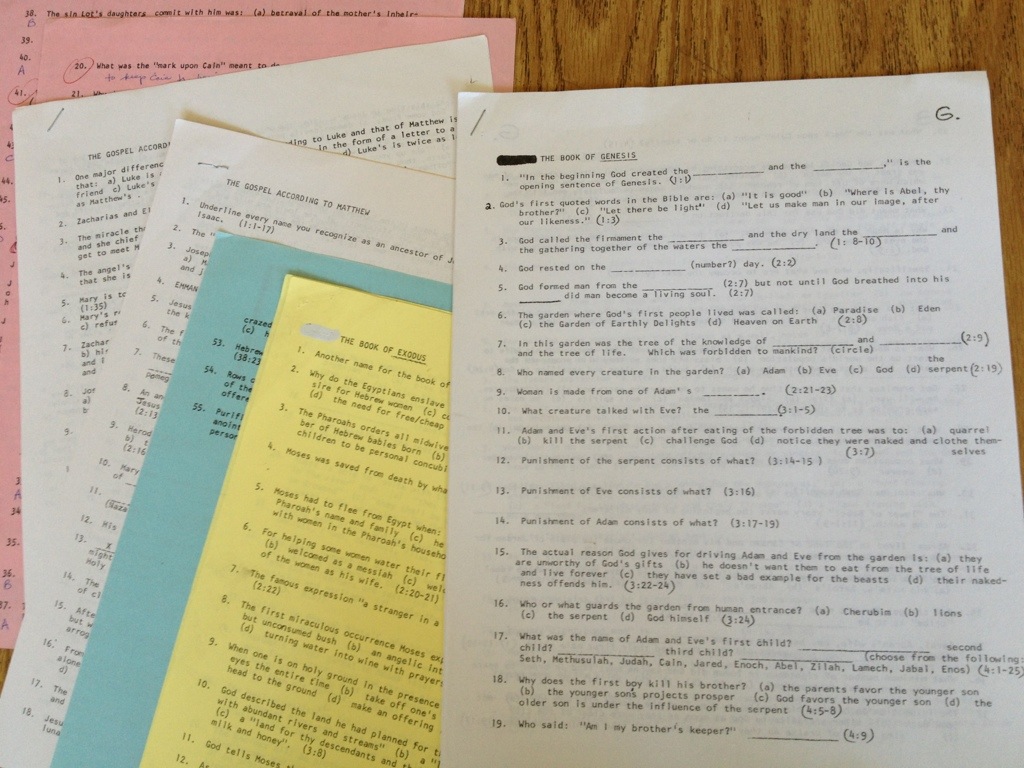
Summer work: inferred or applied questions sampler
“Crime and Punishment (1866) is the story of a murder committed on principle, of a killer who wishes by his action to set himself outside and above society. A novel of great physical and psychological tension, pervaded by Dostoevsky’s sinister evocation of St. Petersburg, it also has moments of wild humour. Dostoevsky’s own harrowing experiences mark the novel. He had himself undergone interrogation and trial, and was condemned to death, a sentence commuted at the last moment to penal servitude. In prison he was particularly impressed by one hardened murderer who seemed to have attained a spiritual equilibrium beyond good and evil: yet witnessing the misery of other convicts also engendered in Dostoevsky a belief in the Christian idea of salvation through suffering.”
– some mad wag’s book review.
How to do the inferred and applied question summer work for Crime And Punishment.
Let me start by pointing out that the guiding question for approaching work on an AP level is
What diction/tone/figures of speech does the author use to convey meaning?
In this case, what language choices is Dostoevsky using to tell this story? What you are doing is reading with this in mind, and creating questions with which to challenge your colleagues, testing their observations.
Ideally, you will know the answers to your questions, but in posing the questions to your classmates, you might be pleasantly surprised by an unexpected answer.
Fair examples:
________________________________________________________
I.i
Inferred
1. What diction supports the metaphor of Raskolnikov as a cat? (or as a small, quiet being)
uneasy…frightened…shrank…crept like a cat…slip out unnoticed (1)
2. In what ways might the actions of the drunks in the pub foreshadow Raskolnikov’s future?
“there was nobody to share his jollity. His friend watched all these outbursts…with a hostile and suspicious expression” (7).
I.ii
Inferred
1. How is the “prophetic insight” of R.’s first impression of Marmeladov foreshadowing?
[You might formulate a question that you will come back to answer after reading further.]
2. How is the one remaining button on M.’s frock coat symbolic of his condition? (8)
He is “held together” by one last button: all the others have burst or been lost, as has his job and his salary and his dignity.
Applied
1. To what Scriptures do Marmeladov’s description of Judgment apply?
[See how the Biblical readings apply to our readings?]
2. How does the condition of M.’s family represent the poverty of today?
I.ii
Inferred
1. How does Marmeladov embody the theme of salvation through suffering?
2. How is Sonya a gold-mine? (22)
[I’ll leave you to answer this. Note that this question is dangerously close to the “Too easy/Cake walk” designation that will land you firmly in the category of “satisfactory minus” or even deficient.]
2. What language is used to reinforce R.’s ideas of amorality and superiority? (Theme)
“Men are scoundrels; they can get used to anything…all the rest is just prejudice, imaginary fears, and there are no real barriers, and that is how it should be!”(23) This observation further convinces R. of the rightness of his plot.
_____________________________________________________
You see that some chapters like the exposition of Marmeladov in I.ii are short stories in themselves, and might seem to be long-winded digressions to the undisciplined reader, but are indeed richly illustrative of themes and symbols. The reading is deep and dense, solidly crafted – and will need your time and attention.
The reward?
Recognition of nuance.
Poor examples:
____________________________________________________
I.ii
1. What did the master of the public house look like?
An iron lock (8). [A facile answer; this smacks of a last-minute job.]
 Kingsley Andersen