Home » AP Literature (Page 6)
Category Archives: AP Literature
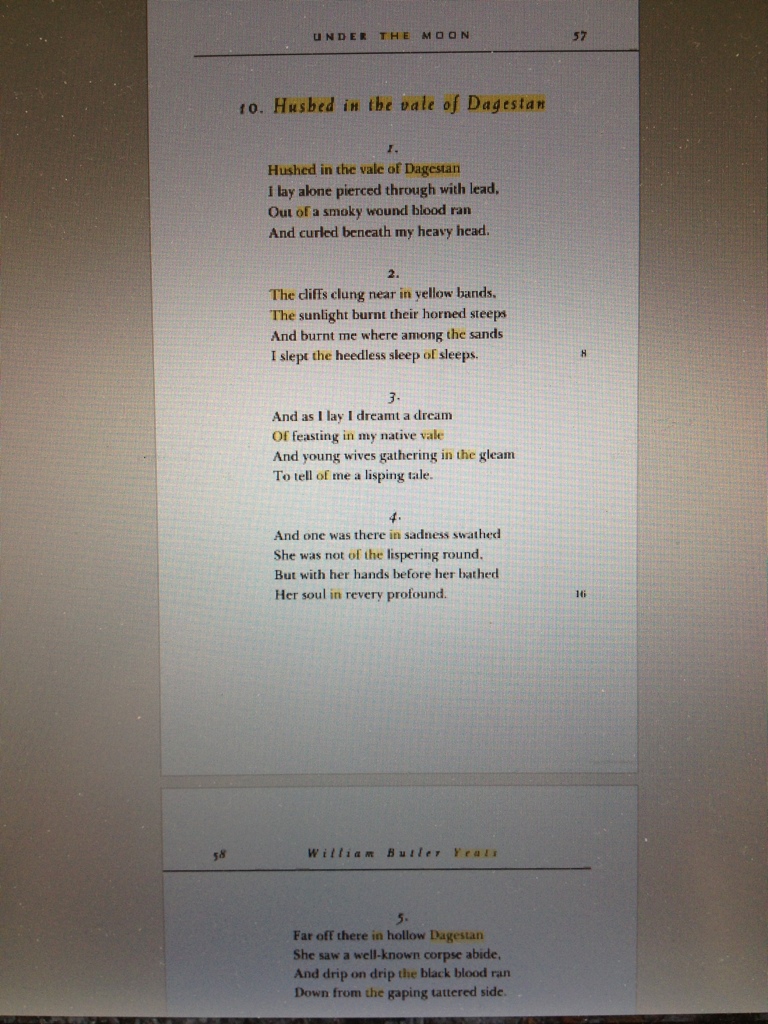
Figures of repetition
A fantastic resource with which to go deeper into figurative speech and the understanding of the craft.
From the aptly-named SILVA RHETORICAE: follow the branches.
from the Landy article:
Landy pointed out that in the Gorgias, a stretch of tortured logic leads Socrates to the curious conclusion that “if you want to harm a criminal, the best thing you can do is to make sure he escapes punishment.”
As for the parables in the Gospel of St. Mark, Landy rejects the popular belief that they are there to help Jesus make himself understood. Quite the contrary, they are designed to “keep outsiders out” and to bring those with advanced metaphoric interpretation skills “even further in,” Landy suggests…To get the most out of the text today, Landy said, readers “should try to talk and think in metaphors, just as Jesus is doing,” rather than look for hidden meanings.
COMMENTARY:
This speaks directly to the summer readings, hey?
Crime and Punishment: thinking through and questioning
Nature is what you find in the pristine world: dirt, soil, seeds that are neither sewn nor selectively bred, minerals, the workings of the animal realms.
Artifice is what man makes, whether that is tool or clothing or custom or law or idea.
Stopping at a red light and going on a green: nature or artifice? A hamburger: nature or artifice? Setting aside a hamburger for a loved one who will be an hour late, and not eating it although we are hungry: nature or artifice?
1. Raskolnikov’s dream: think of the horse as nature and the people as artifice.
What part of nature or the natural world could the horse symbolize?
What part of man-made laws or ideas could the people represent?
Now that you’ve thought that through, flip it: what law or idea or custom could the horse represent?
What natures or instincts could the people symbolize?
2. Raskolnikov, early on, thinks the amateurish criminal makes many mistakes, and that he – the superior intellect – won’t. How does that work out for him?
3. How/why does Raskolnikov think he’s a superior intellect? (You see how that question is answered as the story unfolds, yes?)
As you are realizing, much of what you thought was foreshadowing is being answered as you read: you can go back and answer, or even reformulate, your questions.
4. Does Porfiry really suspect Raskolnikov? How R.’s thoughts run around and around trying to figure that out! When did you, the reader, become sure of that? Did you get the “I knew it!” feeling?
5. What is fever? How does it work physically and mentally? What causes it?
Raskolnikov spends considerable time in a feverish state: perhaps an hour reading up of fever might be illuminating?
Diction in CaP
Diction, simply, is the author’s choice of words.
As the protagonist approaches the murder, pay attention to Dostoevsky’s diction as he describes Raskolnikov’s physical feelings as opposed to his thoughts, i.e., the body as opposed to the mind.
This one:
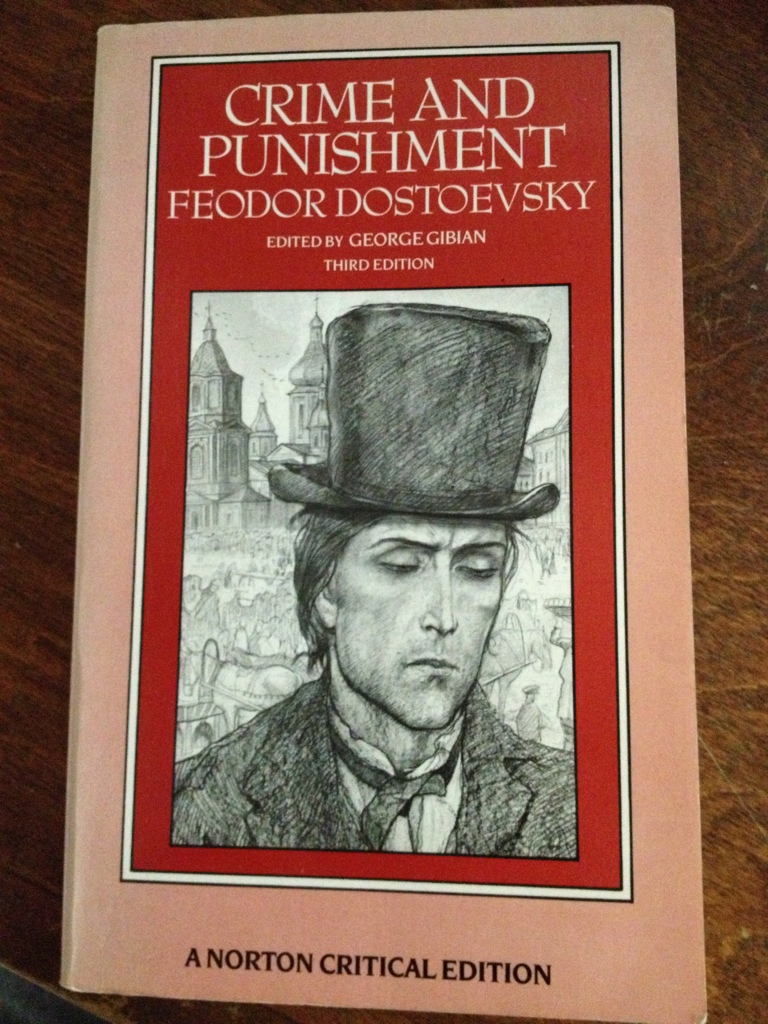
Try for this copy.
Summer work: inferred or applied questions sampler
“Crime and Punishment (1866) is the story of a murder committed on principle, of a killer who wishes by his action to set himself outside and above society. A novel of great physical and psychological tension, pervaded by Dostoevsky’s sinister evocation of St. Petersburg, it also has moments of wild humour. Dostoevsky’s own harrowing experiences mark the novel. He had himself undergone interrogation and trial, and was condemned to death, a sentence commuted at the last moment to penal servitude. In prison he was particularly impressed by one hardened murderer who seemed to have attained a spiritual equilibrium beyond good and evil: yet witnessing the misery of other convicts also engendered in Dostoevsky a belief in the Christian idea of salvation through suffering.”
– some mad wag’s book review.
How to do the inferred and applied question summer work for Crime And Punishment.
Let me start by pointing out that the guiding question for approaching work on an AP level is
What diction/tone/figures of speech does the author use to convey meaning?
In this case, what language choices is Dostoevsky using to tell this story? What you are doing is reading with this in mind, and creating questions with which to challenge your colleagues, testing their observations.
Ideally, you will know the answers to your questions, but in posing the questions to your classmates, you might be pleasantly surprised by an unexpected answer.
Fair examples:
________________________________________________________
I.i
Inferred
1. What diction supports the metaphor of Raskolnikov as a cat? (or as a small, quiet being)
uneasy…frightened…shrank…crept like a cat…slip out unnoticed (1)
2. In what ways might the actions of the drunks in the pub foreshadow Raskolnikov’s future?
“there was nobody to share his jollity. His friend watched all these outbursts…with a hostile and suspicious expression” (7).
I.ii
Inferred
1. How is the “prophetic insight” of R.’s first impression of Marmeladov foreshadowing?
[You might formulate a question that you will come back to answer after reading further.]
2. How is the one remaining button on M.’s frock coat symbolic of his condition? (8)
He is “held together” by one last button: all the others have burst or been lost, as has his job and his salary and his dignity.
Applied
1. To what Scriptures do Marmeladov’s description of Judgment apply?
[See how the Biblical readings apply to our readings?]
2. How does the condition of M.’s family represent the poverty of today?
I.ii
Inferred
1. How does Marmeladov embody the theme of salvation through suffering?
2. How is Sonya a gold-mine? (22)
[I’ll leave you to answer this. Note that this question is dangerously close to the “Too easy/Cake walk” designation that will land you firmly in the category of “satisfactory minus” or even deficient.]
2. What language is used to reinforce R.’s ideas of amorality and superiority? (Theme)
“Men are scoundrels; they can get used to anything…all the rest is just prejudice, imaginary fears, and there are no real barriers, and that is how it should be!”(23) This observation further convinces R. of the rightness of his plot.
_____________________________________________________
You see that some chapters like the exposition of Marmeladov in I.ii are short stories in themselves, and might seem to be long-winded digressions to the undisciplined reader, but are indeed richly illustrative of themes and symbols. The reading is deep and dense, solidly crafted – and will need your time and attention.
The reward?
Recognition of nuance.
Poor examples:
____________________________________________________
I.ii
1. What did the master of the public house look like?
An iron lock (8). [A facile answer; this smacks of a last-minute job.]
 Kingsley Andersen