Home » 2013 (Page 3)
Yearly Archives: 2013
Ballad of Birmingham
Ballad of Birmingham
By Dudley Randall
(On the bombing of a church in Birmingham, Alabama, 1963)
“Mother dear, may I go downtown
Instead of out to play,
And march the streets of Birmingham
In a Freedom March today?”
“No, baby, no, you may not go,
For the dogs are fierce and wild,
And clubs and hoses, guns and jails
Aren’t good for a little child.”
“But, mother, I won’t be alone.
Other children will go with me,
And march the streets of Birmingham
To make our country free.”
“No, baby, no, you may not go,
For I fear those guns will fire.
But you may go to church instead
And sing in the children’s choir.”
She has combed and brushed her night-dark hair,
And bathed rose petal sweet,
And drawn white gloves on her small brown hands,
And white shoes on her feet.
The mother smiled to know her child
Was in the sacred place,
But that smile was the last smile
To come upon her face.
For when she heard the explosion,
Her eyes grew wet and wild.
She raced through the streets of Birmingham
Calling for her child.
She clawed through bits of glass and brick,
Then lifted out a shoe.
“O, here’s the shoe my baby wore,
But, baby, where are you?”
“Tragedy and the Common Man.”
An essay in which Arthur Miller argues that greatness is not a requisite of the tragic figure.
Sentence Diagramming
Here’s a Youtube of the diagramming of the simple sentence.
A touch on the slow side, but it covers everything.


Reading comprehension, simplified
Proof this one for me. Have I missed anything?
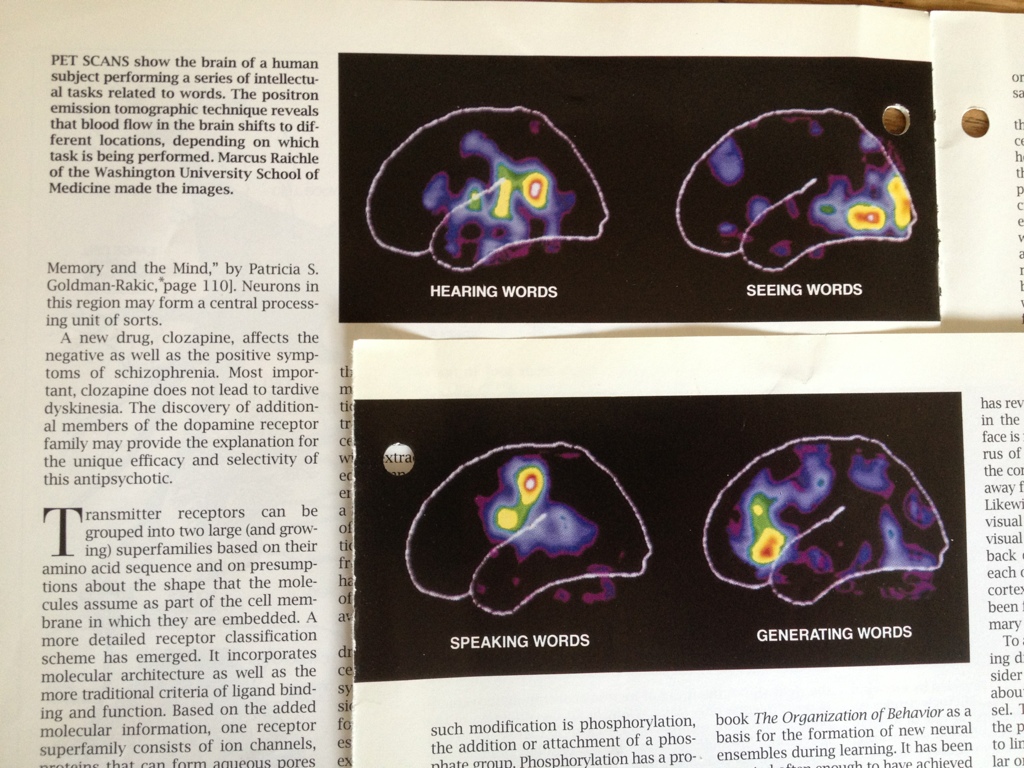
I’m going to teach you a simplified version of how you can teach reading comprehension. An overlooked obstacle to comprehension is a weak understanding of punctuation. First, let’s see what you understand.
You know that a sentence is a complete thought, and that the completed thought ends with either a period, a question mark, or an exclamation mark, right? Excellent! You are with me so far. A thought might be cut off by an interruption – you do know that, yes? Or it can be purposefully left incomplete by the author with the three-dot ellipsis, such as “If at first you don’t succeed…” (May I point out to you that the interruption is indicated by the long dash – as I use here – and not the single hyphen that I used in the compound adjective “three-dot.”)
Additionally, there is the sort-of-period punctuation of the colon, which tells you that the author is going to present some specific information, and the semi colon, which joins two sentences together. The best way to explain the semi colon is to give an example:
He dropped his ceramic cup, which shattered; consequently, he couldn’t get his coffee.
The why of the sentence “he couldn’t get his coffee” is explained in the first sentence “he dropped his cup”; the construction is sort of a two-sentences-in-one deal. If I said to you only “He couldn’t get his coffee,” you’d not know why; the thought would not be complete.
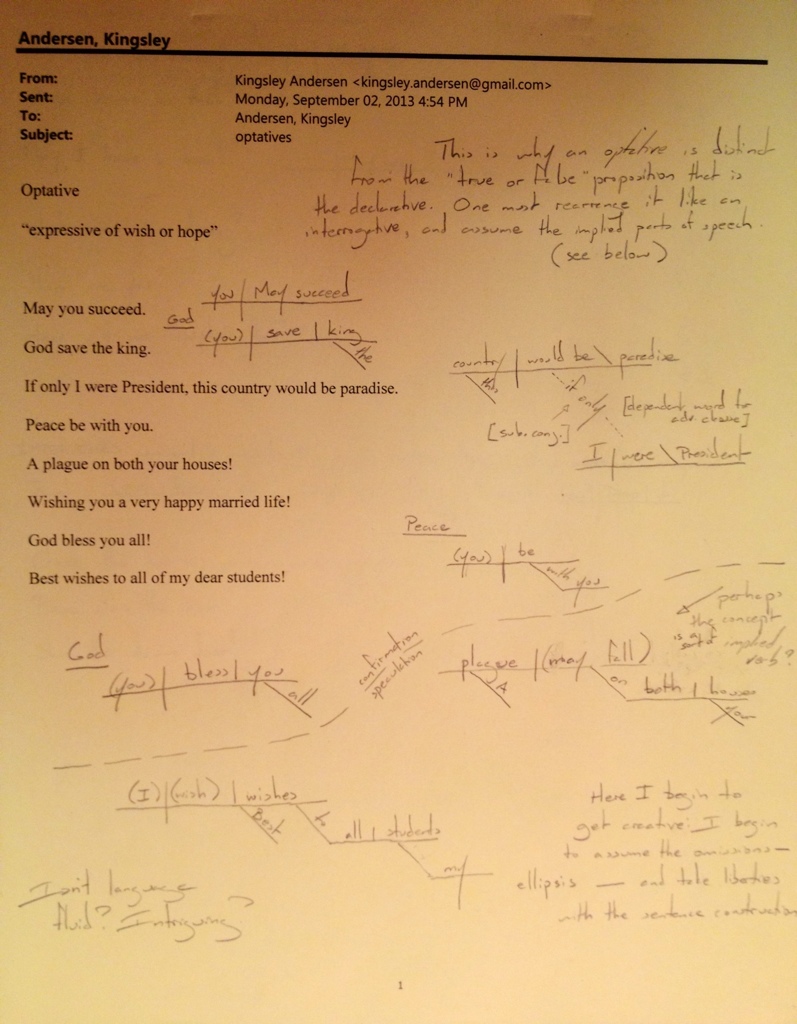
You know that a sentence has four forms, or purposes: the declarative form asserts, states that something exists; the interrogative form, also called a question, asks; the imperative form commands or requests; finally, the optative form expresses a mood of wish, such as “May you succeed in understanding this writing.”
Did you notice that the last paragraph was one long sentence that was made up of five shorter sentences? Did you notice that by using the colon that I informed you that I was going to tell you the four forms? I did so to explain that when my shorter supporting sentences use commas such as in “the interrogative form, also called a question, asks” I need to divide the sentence series with a semicolon.
You will notice I’ve used all the forms and punctuations in this lesson. So now let me ask you: is my meaning clear to you so far?
Congratulations: you are comprehending, and you are comprehending some complex structures.
Comprehension is simply understanding the first sentence of a piece of writing. Then the second, and third. With each successive sentence we modify the meaning of the first, we find the topic, we consider how the preceding sentences inform the topic. We consider what we still need to know. We anticipate what will be revealed. But the foundation is in understanding the sentence, its forms, how it ends, and how it is left unended.

 Kingsley Andersen