Home » 2013 (Page 10)
Yearly Archives: 2013
Understanding Poetry: the “West Wind #2” thesis rough-out
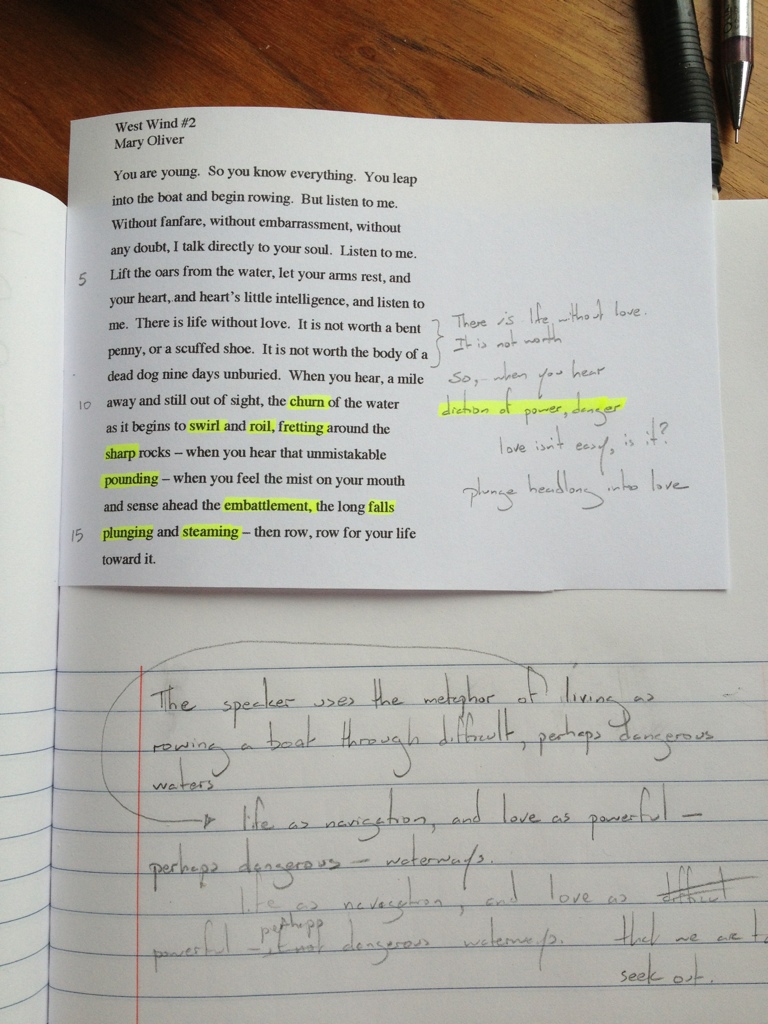
The essay begins to take shape.
Note that I’ve numbered the lines in increments of five.
The Wheel of Fortune

Another version.
The Wheel of Fortune
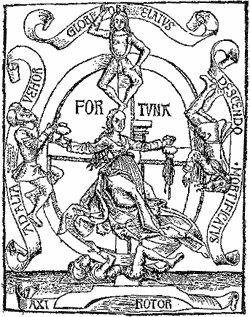
One depiction of The Wheel of Fortune.
Fourtuna is the Roman goddess of luck.
The Three Moving Forces
The Elizabethans of Shakespeare’s time, in response to the Question of Good and Evil, believed in three factors that shape how things unfold:
Providence, i.e., God’s will,
Fortune, i.e., luck and chance, and
human character, i.e., your diligent study, practice, training, and action.
Take care of your end, my friends: “‘Good luck’ is when opportunity meets preparation.”
A letter to Advanced Placement students…
…who have been assigned Crime And Punishment as a summer reading book:
HaaaaahaaaahahhhhaaAAAAAAA!
Nah, seriously:
“College-level literature.” By that, they mean university-level literature. (What, did you think it would be, The Alchemist? HaaaahahhhhaaaaaaHAAAAA. Okay, let me compose myself.) Hence the exhortation to start now.
One chief reason that we recommend the Norton Critical Edition of the Coulson translation is because of the excellent essays that follow: you did notice that 1/3 of the pages are commentary and essay, no?
Read the story. Raskolnikov thinks he can do the murder — that he should do the murder — but when he’s done it, his thinking really falls apart. Human nature is being illuminated quite deeply in this rich story.
Are you seeing that? If you are, then you’re on the right track and you’re doing fine. When you finish, read the commentary and essays. Things will click.
CaP is part of the canon. If the novel doesn’t show up on the free choice essay list, I will be a monkey’s uncle. (Even if it doesn’t, the question will say “or a work of equal literary merit,” and CaP is indeed that.) By taking your time with Dostoevsky, you are laying a firm foundation.
Take time and have faith.
Understanding Poetry: “West Wind #2” — the real questions
What is it that we are to row toward?
Were we initially rowing from something?
Why?
The answer is not literal, not “the churn of water,” the “pounding,” the “falls/plunging.” We have to go into symbol and metaphor at this point.
The speaker leaves us to answer. Our only clue: a life without love hasn’t much worth.
Would you like me to tell you the answer?
What makes you think I know?
Understanding Poetry: “West Wind #2″ literal and symbolic
http://www.screencast.com/t/jen7sURLE
Part two of the “West Wind #2” lecture.
Language is literal and symbolic, and to apprehend the symbolic meaning, we’d best know what is being said literally. Directly.
The poet is going to employ sentence variety and complexity, and we need to be able to follow the line.
Understanding Poetry: Is “West Wind #2” verse or free verse, sense or non-sense?
http://www.screencast.com/t/QCkdRyOEI
A basic walk-through using Snagit and Screencast.
This is the first part of the online lecture to illustrate the steps I’ve written about — see the tag “Poetics.”
A review of the types of sentence in the tag of the same might also be helpful.
Re-Imagining the Comprehensive High School
Re-Imagining the Comprehensive High School
What is the “authentic problem” of poetry?
Understanding Poetry: Mary Oliver, “West Wind #2”
Read this.
Yes — out loud.
By and by, I will examine you:
West Wind #2
Mary Oliver
You are young. So you know everything. You leap
into the boat and begin rowing. But listen to me.
Without fanfare, without embarrassment, without
any doubt, I talk directly to your soul. Listen to me.
Lift the oars from the water, let your arms rest, and
your heart, and heart’s little intelligence, and listen to
me. There is life without love. It is not worth a bent
penny, or a scuffed shoe. It is not worth the body of a
dead dog nine days unburied. When you hear, a mile
away and still out of sight, the churn of the water
as it begins to swirl and roil, fretting around the
sharp rocks – when you hear that unmistakable
pounding – when you feel the mist on your mouth
and sense ahead the embattlement, the long falls
plunging and steaming – then row, row for your life
toward it.
 Kingsley Andersen